A new book by R.A. Varghese

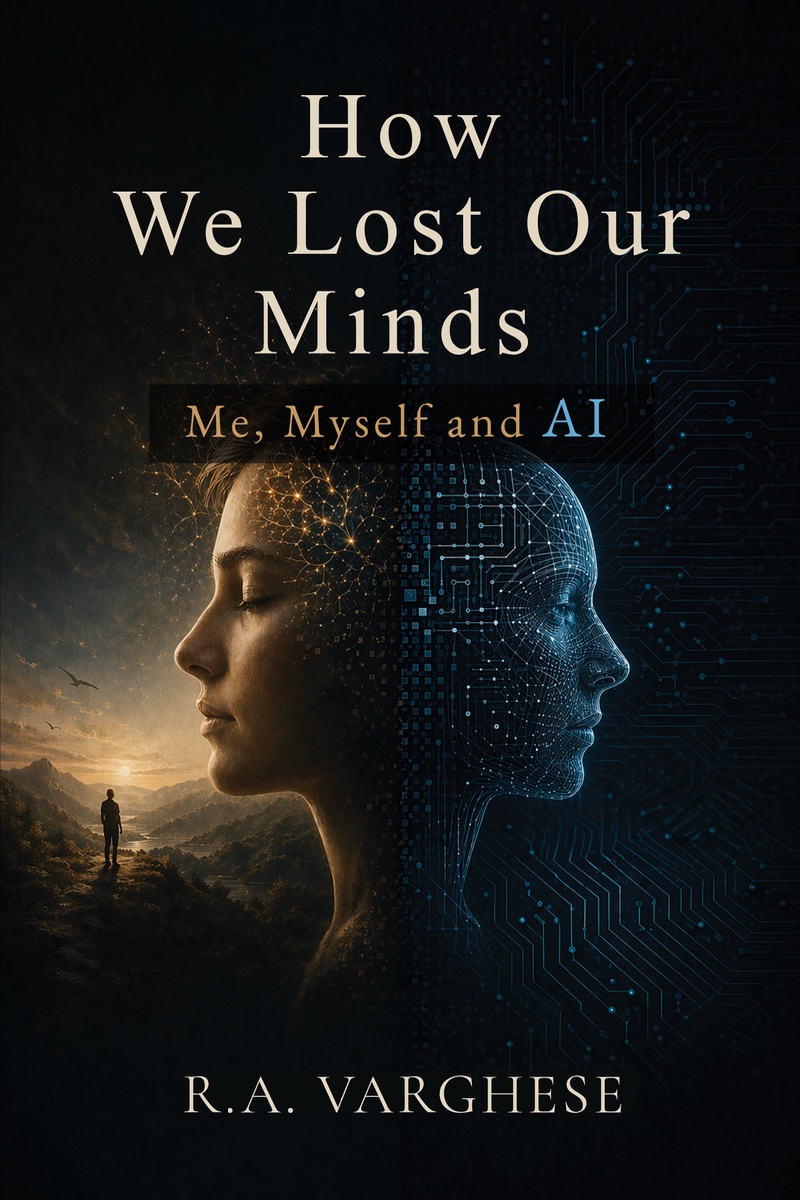
How We Lost Our Minds

Me, Myself and AI

Two spells have been cast over the modern mind. On one side, we mistake brains for persons. On the other, we mistake machines for mortals.

Mind & Machine Science · Philosophy 2025
How We Lost Our Minds — Me, Myself and AI, by R.A. Varghese
Scroll
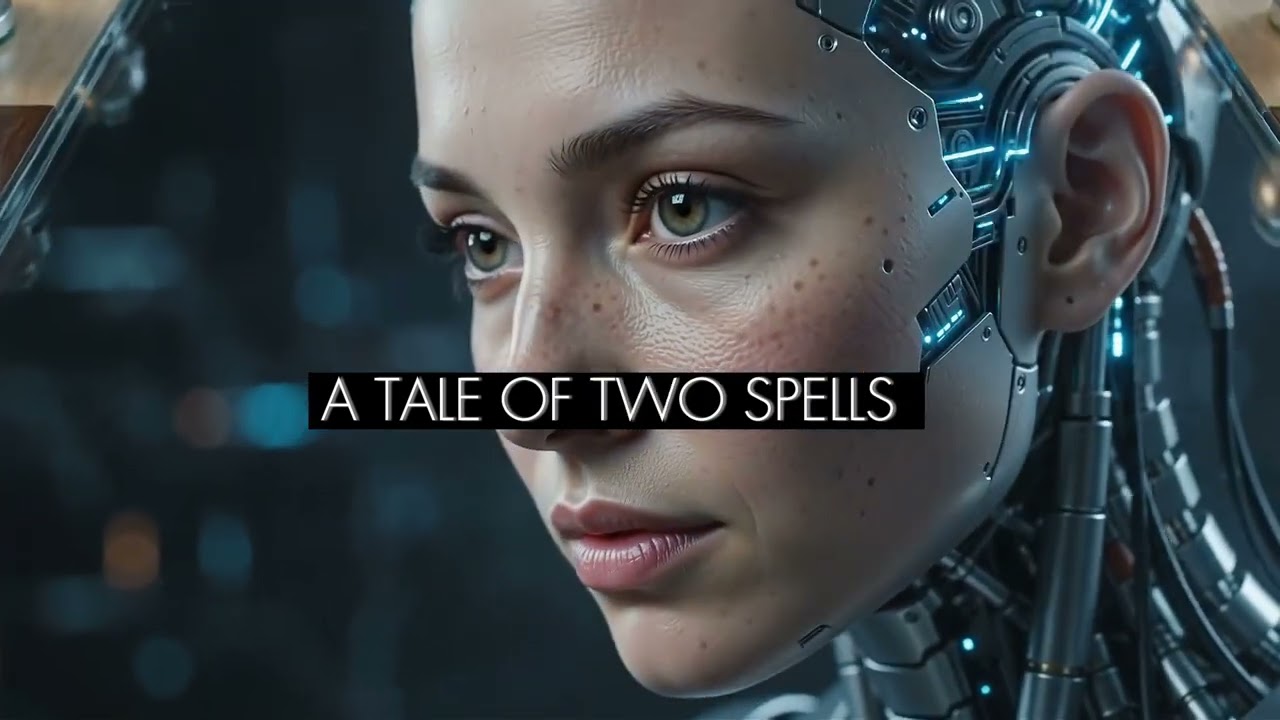
The Premise — A Tale of Two Spells

We have been talked out of our own minds.

In the age of the algorithm, two opposite errors have quietly merged into one confusion — and together they have cost us the most basic fact about ourselves.

I The First Spell

We mistake brains for persons.

We are told the self is a trick of neurons — that love, memory and meaning are just chemistry, that "you" are a story your wiring tells itself. The human mind is dissolved into meat and math.

II The Second Spell

We mistake machines for mortals.

At the same moment, we grant our chatbots an inner life they do not possess — crediting code that predicts the next word with understanding, feeling, even a soul. The machine is mistaken for a mind.

Pull at either thread and the same question unravels:
what is a mind — and do you still have one?

The Questions It Answers

The hardest questions of the AI age — asked plainly, answered clearly.

Three questions everyone is arguing about and almost no one is defining. Tap a card to see how the book reframes it.

Q. 01
Can a neural network actually know anything?
A model can route a trillion parameters and never grasp a single meaning. The book draws the line between processing and understanding — and shows why pattern-matching, however vast, is not knowledge.
+ Reveal
Q. 02
Is your chatbot conscious — or just convincing?
Fluency is not feeling. Varghese examines what large language models really do beneath the conversation, and why the appearance of an inner life is the most seductive illusion of the era.
+ Reveal
Q. 03
Are you just a computer made of meat?
If machines aren't minds, the deeper question returns: are we? The book makes the case that the human mind is real, irreducible, and not a piece of software running on a brain.
+ Reveal
A human face dissolving into a circuit-traced machine face
Drag · which side are you?
The Mind
The Machine

"AI is an artifact of
mathematics — not a
mind waking up."

Varghese takes you under the hood of modern intelligence — neural nets, deep learning, the transformer — and out the other side, to the question machines can never answer for us: what it means to be a self that actually experiences the world.

Inside the Book — The Terrain

From silicon to the soul, in one clear line of sight.

01
Neuroscience
What the brain really does — and the leap from neurons firing to a person who cares.
02
Cognitive Science
The mind-as-computer metaphor — where it illuminates, and where it quietly misleads.
03
Neural Networks
How artificial neurons learn, and why "neural" is a borrowed word, not a literal claim.
04
Deep Learning
The engine behind the boom — what it captures about the world, and what it cannot.
05
Large Language Models
Next-word prediction at planetary scale — and the line between speech and meaning.
06
World Simulations
Models that mirror reality — and why a perfect map is still not the territory.
07
Intelligent Agents
Systems that plan and act — and the difference between behavior and intention.
08
Consciousness
The one fact no instrument detects, yet the only one you know from the inside.
09
Personhood
The thread that runs through it all: what you are, and why it can't be downloaded.
A Voice the Field Takes Seriously

When this author writes about the big questions, Nobel laureates answer.

The year's most intriguing book about God was produced not by theologians but by 60 world-class scientists, 24 Nobel Prize-winners among them.

Time Magazine
On Cosmos, Bios, Theos, edited by R.A. Varghese — a landmark of the science-and-mind conversation.

Outstanding Books in Science and Natural Theology.

The Templeton Prize
Citation for Cosmic Beginnings and Human Ends — Varghese's Templeton Book Prize–winning work.

Author & editor of fifteen books · contributors include 24 Nobel laureates · Oxford · Cambridge · Harvard · Yale

R.A. Varghese

Four decades at the frontier of science & mind

Roy Abraham Varghese is an interdisciplinary thinker who has spent his career at the seam where science, philosophy and the human mind meet. He is the author and editor of fifteen books on the questions that machines have only made more urgent.

His Cosmos, Bios, Theos gathered the reflections of sixty leading scientists — twenty-four of them Nobel laureates — and was called by Time "the year's most intriguing book about God." His Cosmic Beginnings and Human Ends won a Templeton Book Prize, and he co-authored There Is a God with the philosopher Antony Flew.

0
Books authored
& edited
0
Nobel laureates
among contributors
0yr
At the science-
and-mind frontier
Why this book, now

Long before chatbots could hold a conversation, Varghese was already convening scientists and AI pioneers around a single, stubborn question: can a machine have a mind? Four decades later — with that question suddenly everywhere and worse defined than ever — he returns to it with the clarity the moment demands.

Cosmos, Bios, Theos The Missing Link Metaverse of Mind There Is a God
How We Lost Our Minds — Me, Myself and AI
Get Your Copy

Reclaim your mind.

The most important argument of the AI age isn't about what machines can do. It's about what you are. Start reading today.

Hardcover Paperback eBook Audiobook